Life’s visit to Death
A Gentleman in MoscowLife’s visit to Death is Count Alexander Ilyich Rostov’s idea that Life can be as stealthy and consequential as Death: it can arrive unannounced, draw someone out of habitual seclusion, and alter the course of a life. Speaking to his sister Helena Rostov, he recasts the familiar figure of Death as a visitor into a double-sided pattern. Death may take someone by surprise, but Life can approach with the same quiet cunning—and its arrival may open a path rather than close one.
The Reversal of a Familiar Story
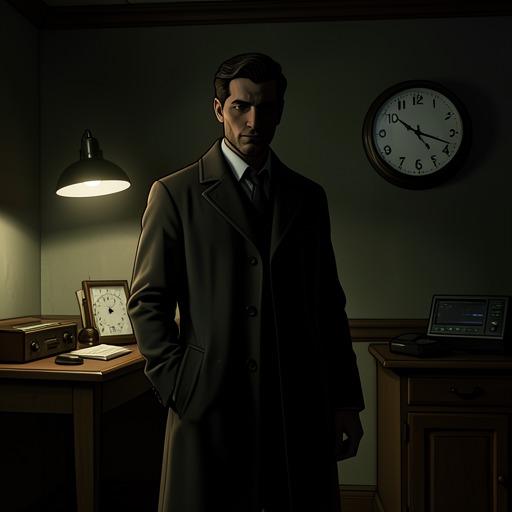
The Count begins with a convention he says has been present since storytelling began. Death comes into town unnoticed, takes a room at an inn, waits in an alley, or lingers in a marketplace. It chooses its moment when a hero has found some respite from ordinary affairs, then pays him a visit. The images make Death seem less like an abstraction than a patient intruder moving through familiar public spaces. Its power lies partly in the contrast between the hero’s temporary ease and the arrival he cannot control.
The Count’s qualification changes the pattern without denying Death’s presence. Life, he argues, can wear the same hooded coat and occupy the same hidden places: an alley or the back of a tavern. This parallel makes Life’s approach recognizable as a visit, but not as a simple opposite in which every arrival guarantees happiness. The force of the idea is that a person may be approached and redirected without seeing the approach coming. Life’s agency is figured as elusive and tactical, not as a visible plan announced in advance.
Lives Drawn Out of Seclusion
Mikhail Fyodorovich (Mishka) supplies the Count’s first example. Life finds him hiding behind his books, draws him out of the library, and takes his hand in a secluded place overlooking the Neva. The sequence moves from enclosure to encounter: books and library mark a withdrawn world, while the hand-taking beside the river gives the visit a personal, intimate form. The Count presents this change not as a decision made in isolation but as an encounter that finds Mishka where he has retreated and leads him beyond that refuge.
Andrey’s example is shorter but extends the idea beyond the library and the riverbank. Life finds him in Lyon and beckons him to the big top. The circus replaces Mishka’s secluded setting with a public spectacle, yet the structure remains: Life locates a person in one place and calls him toward another. Together, the examples give the Count’s metaphor different forms of movement. One is drawn from books into a private meeting; the other is summoned from Lyon toward the circus. The visit is less a single kind of event than a pattern in which unexpected contact breaks the continuity of ordinary life.
The Prediction About Nina
The Count turns from these recollections to Nina. In a conversation with Helena, he contrasts political and social processes that may be probable with what he regards as genuinely inevitable. Collectivization and the removal of kulaks, he says, may be likely, but their likelihood does not settle the question of inevitability. He then makes a different kind of prediction: Life will find Nina too.
His forecast gives the metaphor a series of possible approaches. Life might follow Nina in a taxi, encounter her by chance, or work its way into her affections. It may beg, barter, collude, or resort to chicanery to accomplish this. The accumulating verbs make the idea vivid and almost comic, but they also show how the Count understands change: not necessarily as a grand decision or a public turning point, but as a succession of ordinary-looking approaches that finally become consequential. He describes Nina as sober and alert, yet insists that her liveliness will not let Life simply shake her hand and leave. The prediction is confident, but this passage offers it as the Count’s conviction, not as confirmation of what Nina’s future will be.
Meaning and Narrative Function
The concept turns fate away from a single, terminal encounter. In the opening pattern, Death’s visit interrupts the hero’s respite; in the Count’s revision, Life can also interrupt, but its visit may create attachment, movement, or a new direction. Neither force needs to announce itself. Their shared disguise and hidden routes make the ordinary spaces of inns, alleys, libraries, streets, and public venues potential thresholds between one condition and another.
The Count’s examples also keep the idea grounded in particular lives rather than leaving it as a maxim. Mishka’s hand is taken beside the Neva; Andrey is beckoned toward a circus; Nina is imagined being followed, surprised, and drawn into affection. The pattern links private feeling with outward movement, while leaving the means of change unpredictable. When the Count ends by sighing that the world is extraordinary and falls asleep in his chair, the prediction remains open: its force comes from his certainty that Life will find Nina, not from a scene showing what happens next.